A Systems Design project at DTU, team of 4
Keeping first-time investors invested through a market fall
A concept inside Groww's Mutual Funds section that helps first-time SIP investors decide calmly when the market falls.
- My part
- Personas, the high-fidelity prototype, 2 of the 6 usability tests and the final deck
- Note
- A class concept. Not made for or with Groww.

01The problem
Many young Indians start a SIP and stop it during their first big market fall.
They lock in the loss and miss the recovery.
- Tap 1Pause SIP
- Tap 2A generic question
- SIP paused
In today's apps, pausing a SIP takes two taps. There is no context, a generic question and no reminder of why the investor started.
- Tap 1Cancel reason
- One screenMatching help
- Tap 2Pause SIPor Cancel SIP anyway
Groww's cancel reasons stay, and each reason opens at most one screen of matching help. Cancelling still takes two taps.
02My part
This was a team project.
This was a team project of 4. My teammates led the desk research. Everyone proposed investor archetypes, and I turned them into the final personas the team worked from.
Once the team chose the problem, I built the high-fidelity prototype, ran 2 of the 6 usability tests, changed the design based on what my testers showed, and made the final presentation.
Led by me
- Final personas
- High-fidelity prototype
- Final presentation
Shared
- Desk research
- Teammates
- Investor archetypes
- Everyone
- Usability tests
- 2 of the 6 by me
03Seeing it as a system
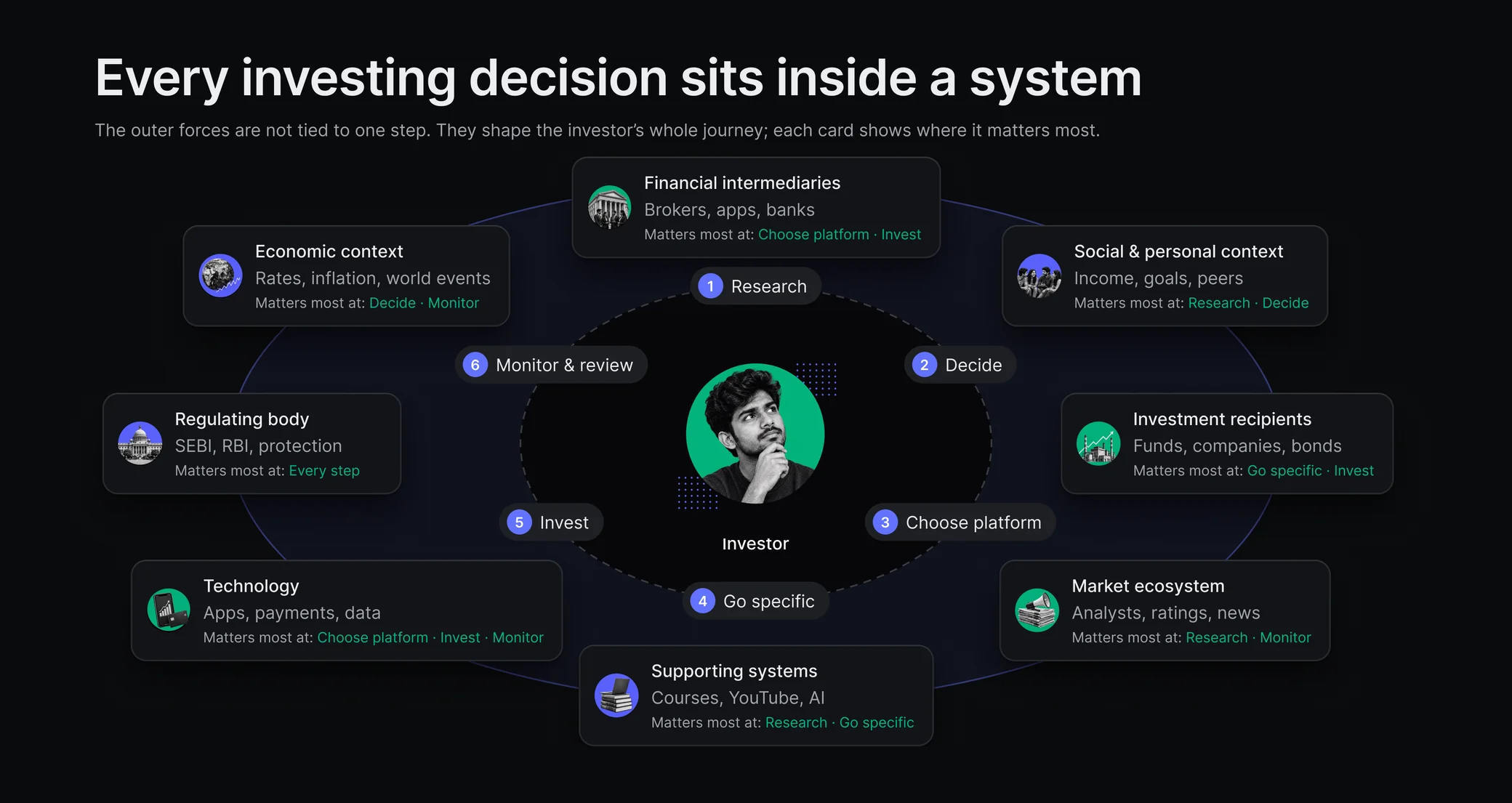
We mapped retail investing in India as a system of investors, platforms, regulators and advisers.
We found three places where investors get hurt.
Start
Some open an account and never start.
Conflict with the system: Medium
Stay
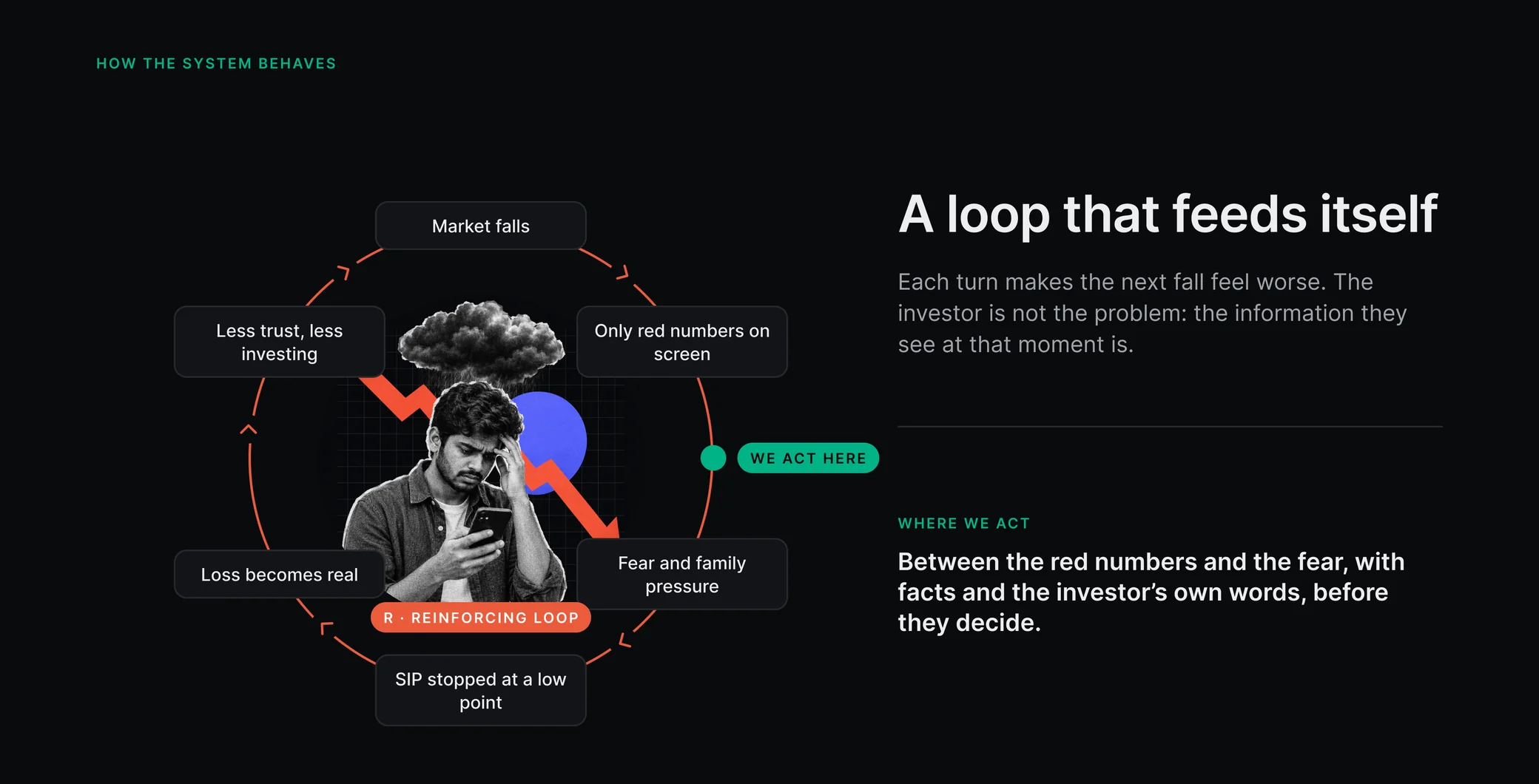
Some start a SIP and stop at the first fall.
Conflict with the system: Low
Trade
Some young traders lose money in futures and options.
Conflict with the system: High
We chose the second one, which we called Stay. Helping the investor here hurts no one else in the system, and it happens at one clear moment, the first market fall.
04Research
Research
We compared 7 Indian platforms and 7 international ones on how they handle SIP onboarding, nudges, trust and the moment a user wants to stop.
- 01
Every Indian platform shows a list of reasons at cancel.
- 02
None of them helps the user based on that reason.
- 03
In India, only registered advisers may give investment advice.
So the app cannot tell anyone to keep investing or which fund to pick. It also has to avoid dark patterns.
Compared: Groww, Zerodha, Fyers, Dhan, Upstox, Angel One, INDmoney, Vanguard, Fidelity, Betterment, Wealthfront, Hargreaves Lansdown, Scalable Capital, Raiz.
The key insight was simple.
Investors usually have the right information, but not at the moment they decide. The gap is timing and placement, not knowledge.
05The design
Fit into the existing system. Don't add a new layer.
Calm moment, starting a SIP
- Fund pageChanged
- Start SIPChanged
- Dip planNew
- SIP startedChanged
Moment of fear, a market fall
- DashboardChanged
- SIP detailsChanged
- Skip sheetChanged
- Cancel reasonChanged
- Matching helpNew
- EndingExisting
One switch in Settings turns it all off, and Groww works exactly as before.
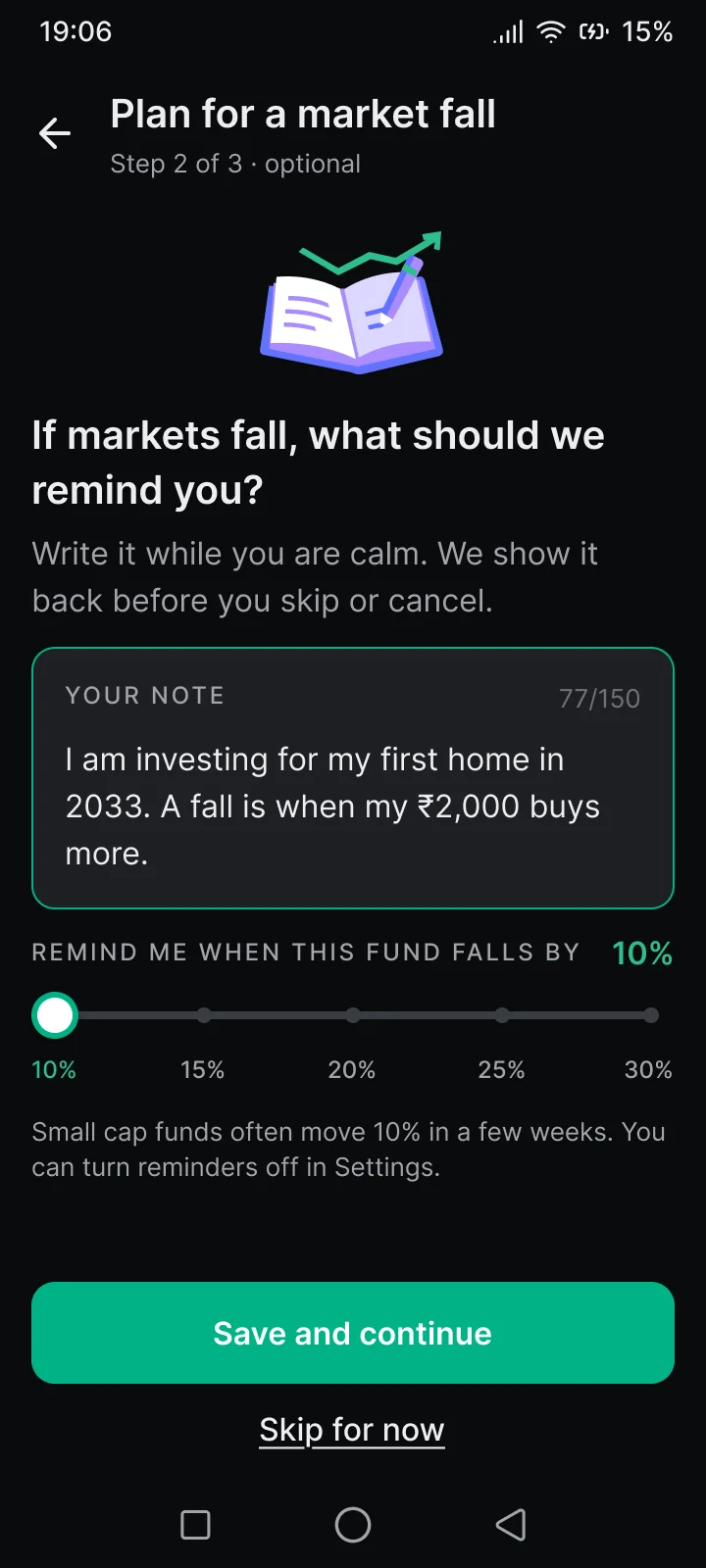
Prepare while calm.
When starting a SIP, the investor can write a note to their future self and choose when to be reminded, from a 10% to a 30% fall.
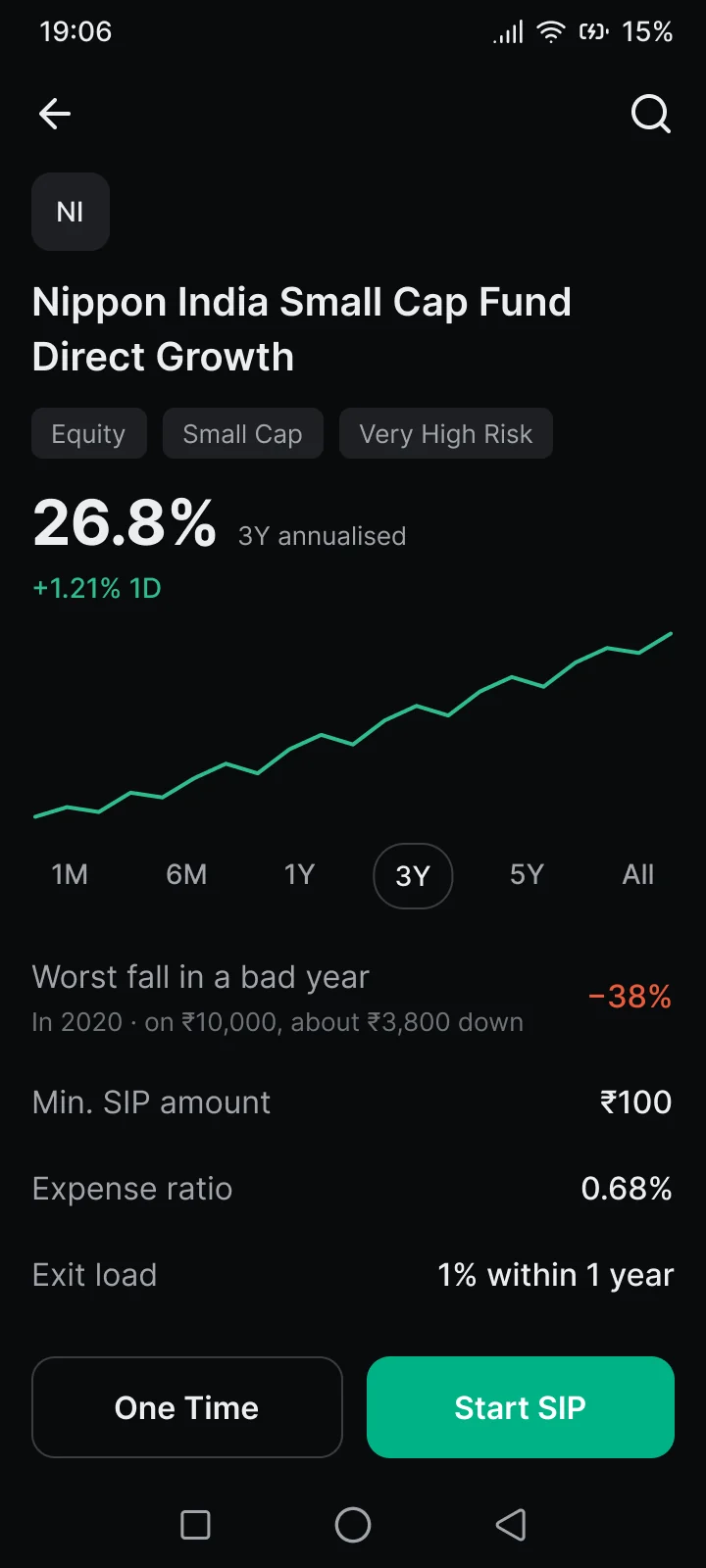
The fund page also shows the fund's worst past fall.
Explain the fall without advising.
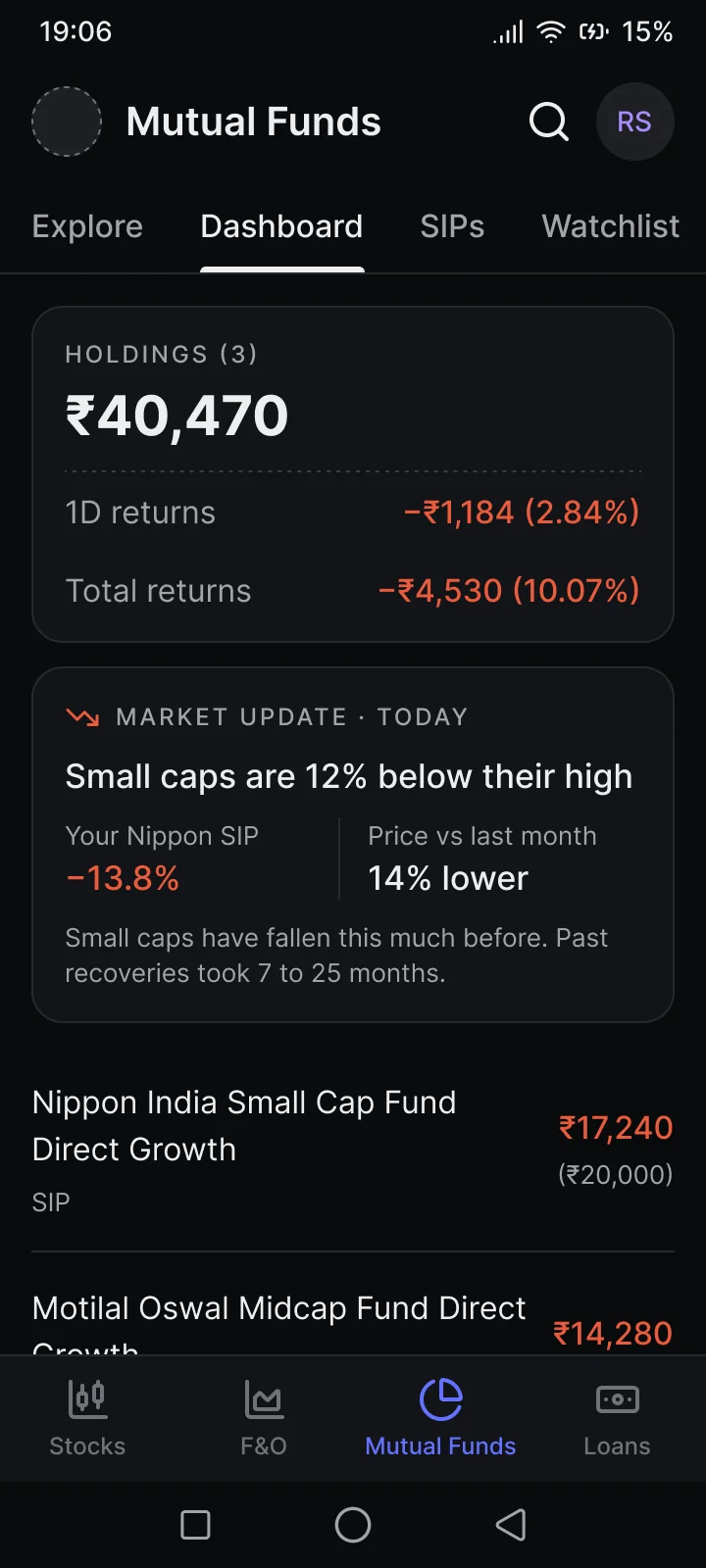
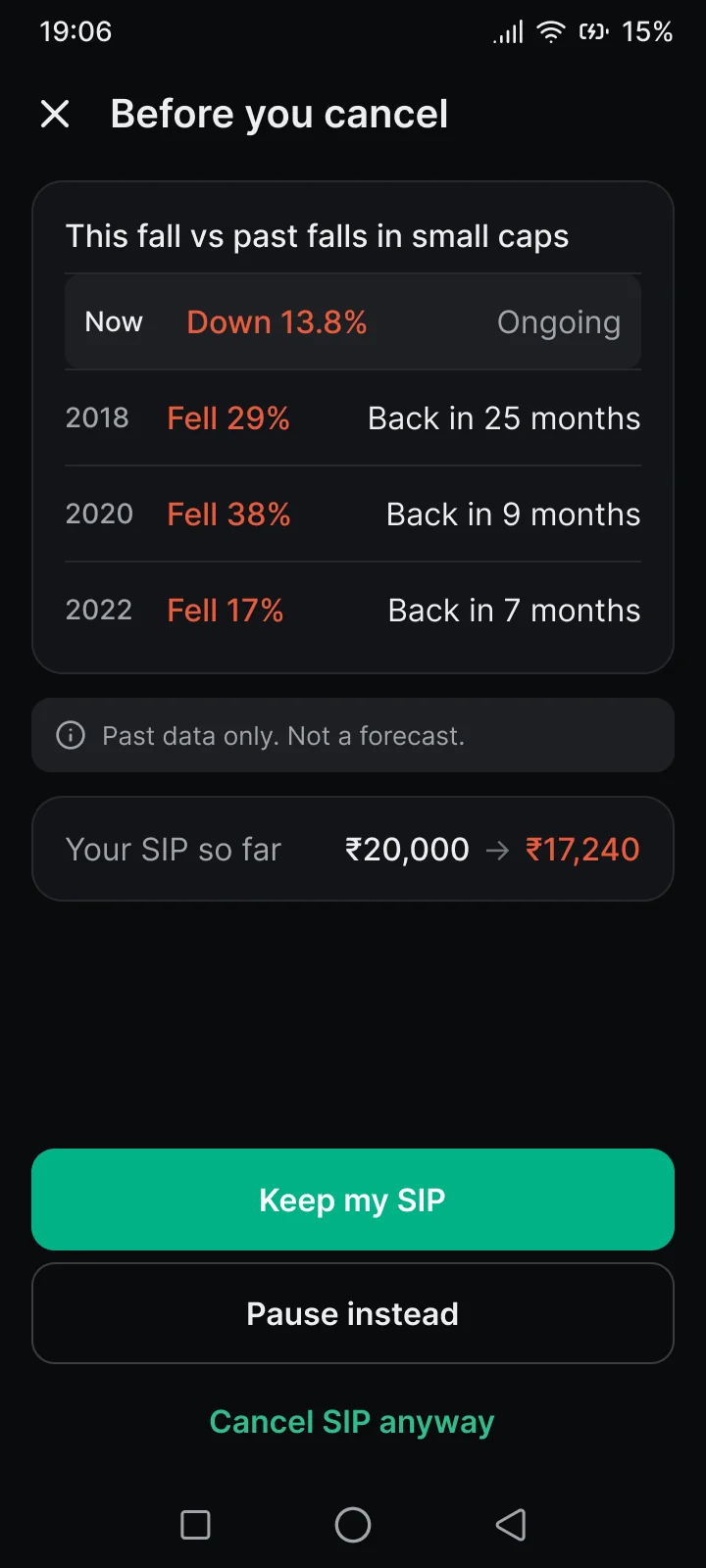
On a fall day, the dashboard shows a calm card with how far prices fell and how past falls recovered.
It never says buy or sell.
Slow the decision without blocking it.
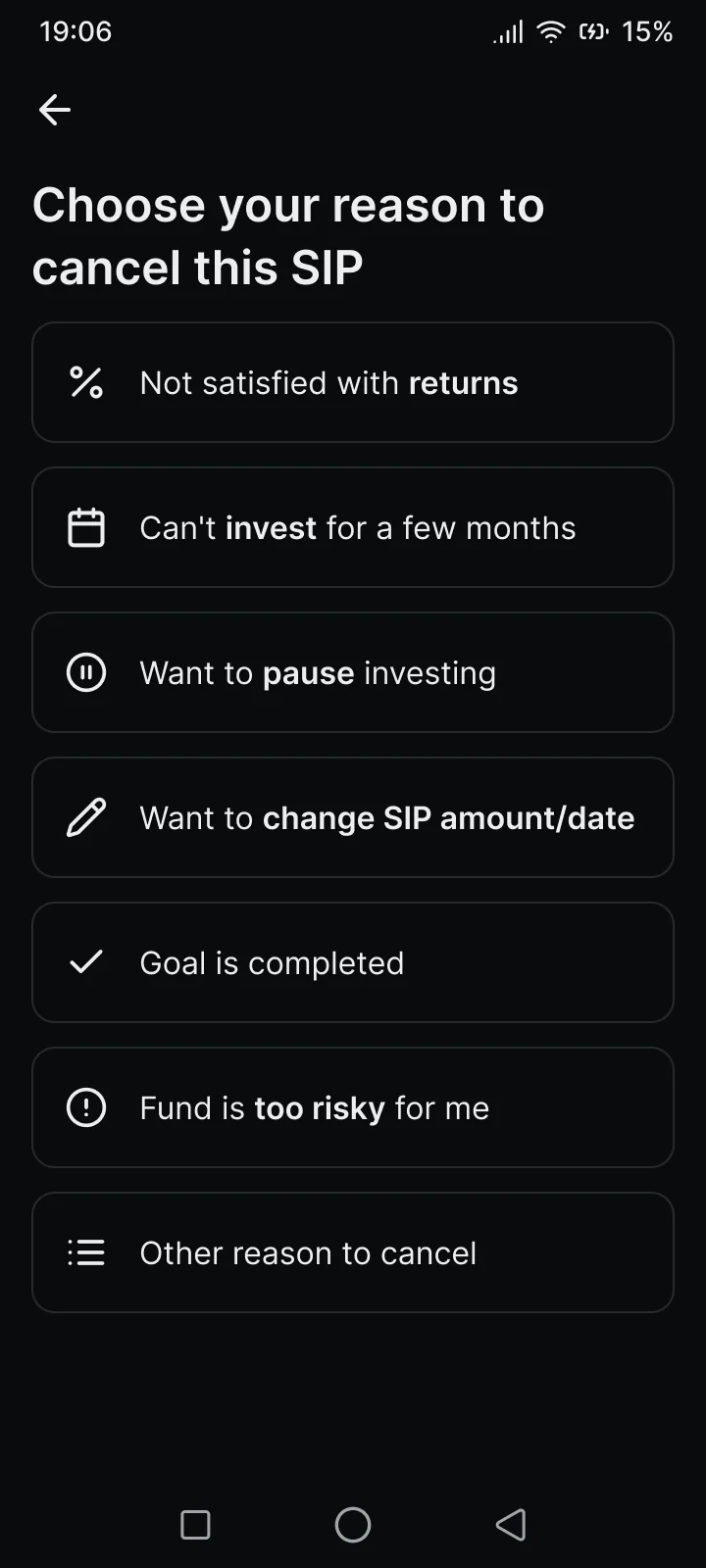
Groww's cancel reasons stay, and each reason opens at most one screen of matching help.
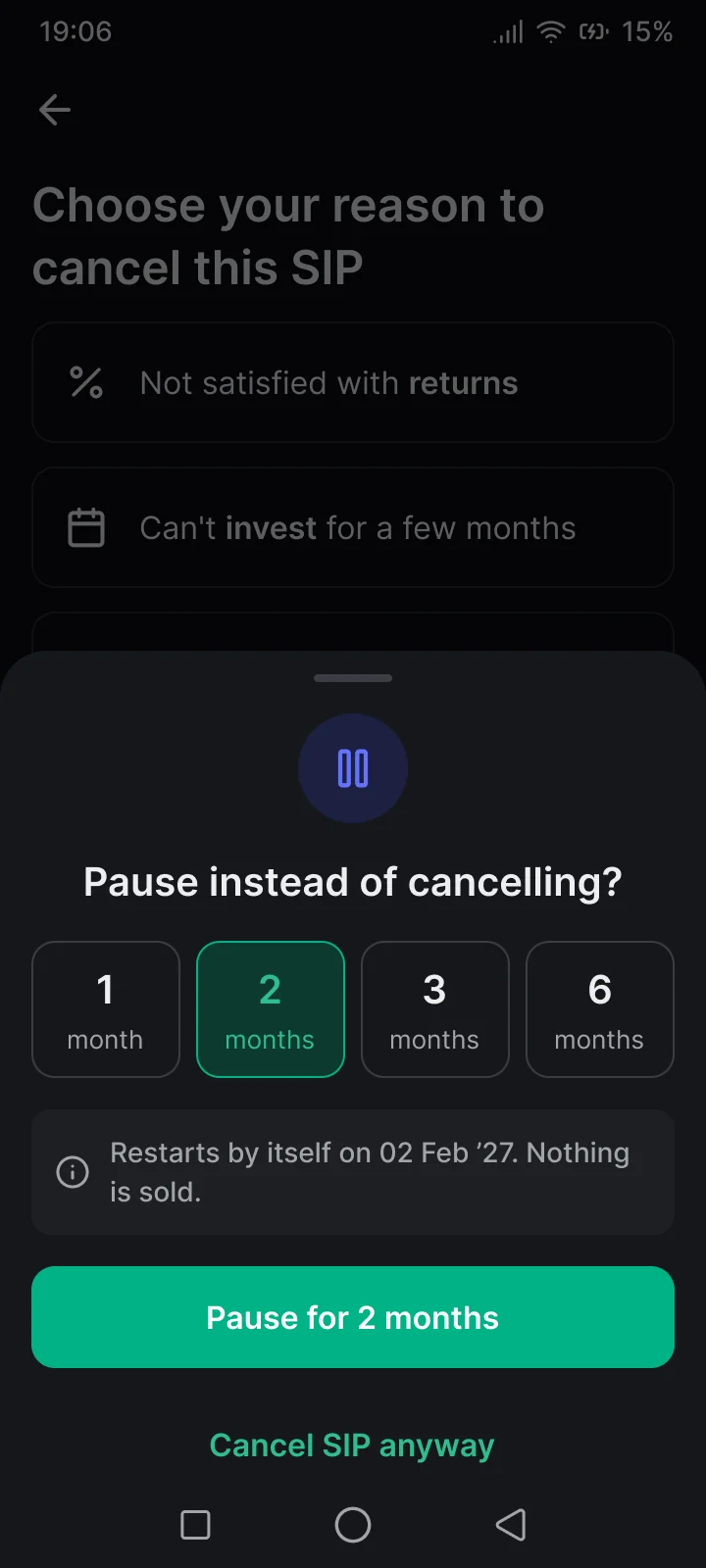
Cancelling still takes two taps.
Give the right help for the right reason.
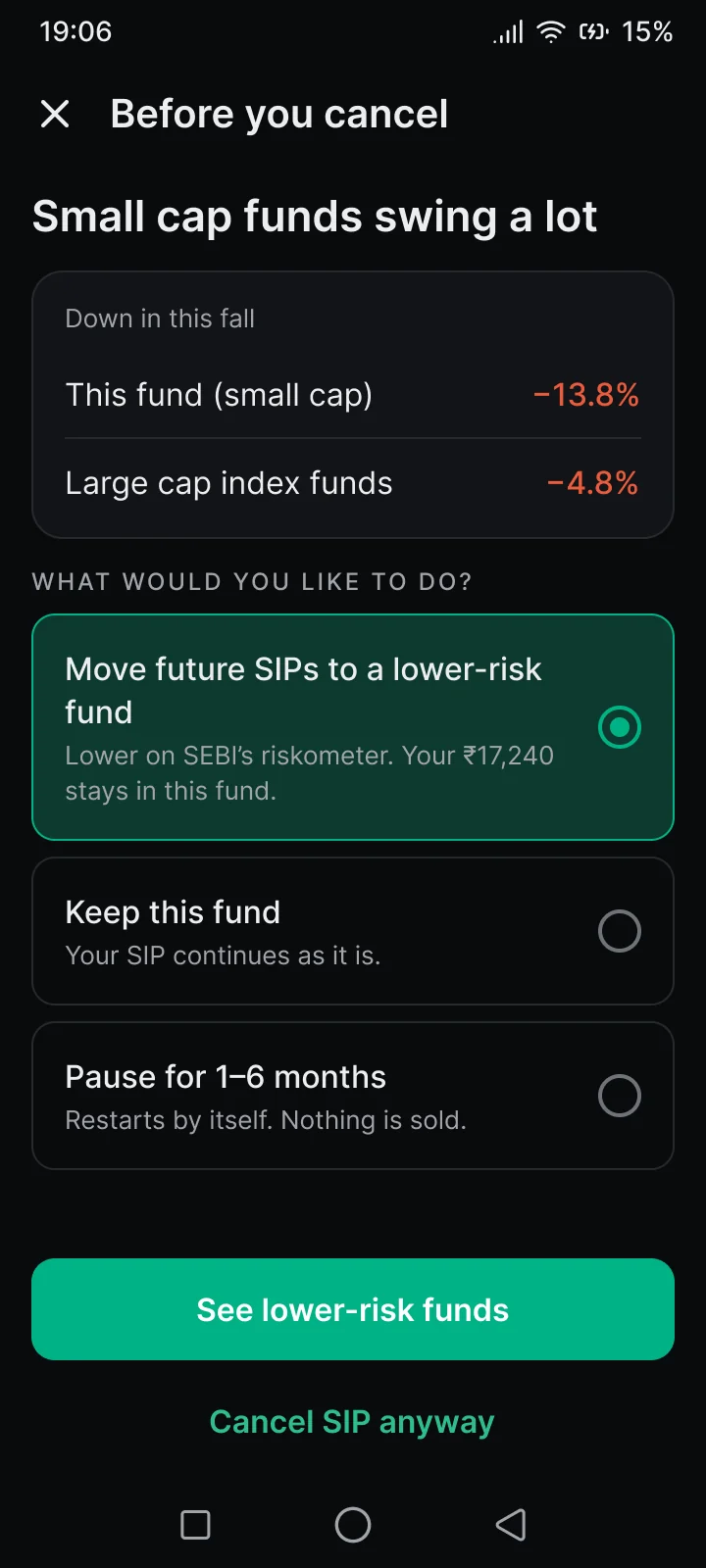
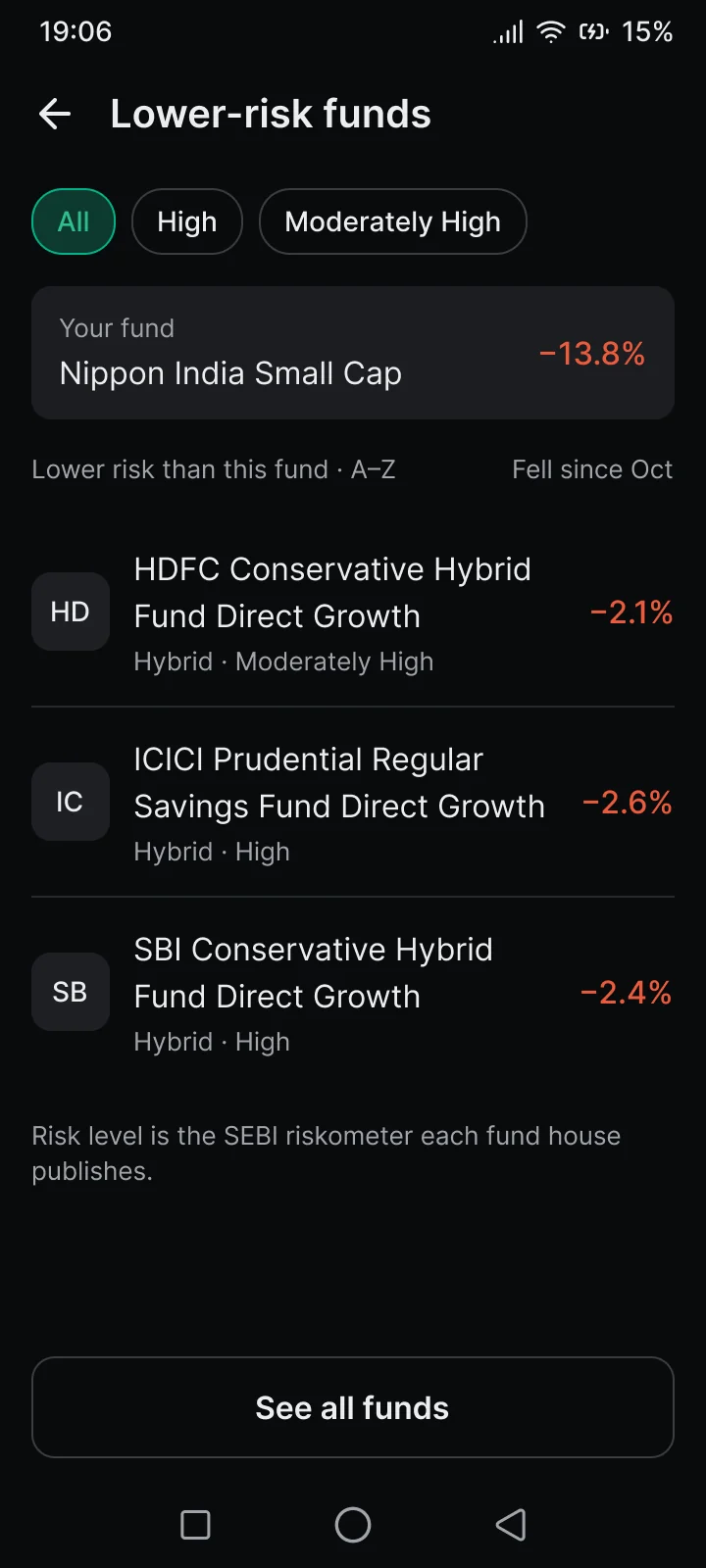
If the fund feels too risky, the investor can move future SIPs to a fund lower on the SEBI riskometer, sorted A to Z, without the app picking one.
The reason decides the help.
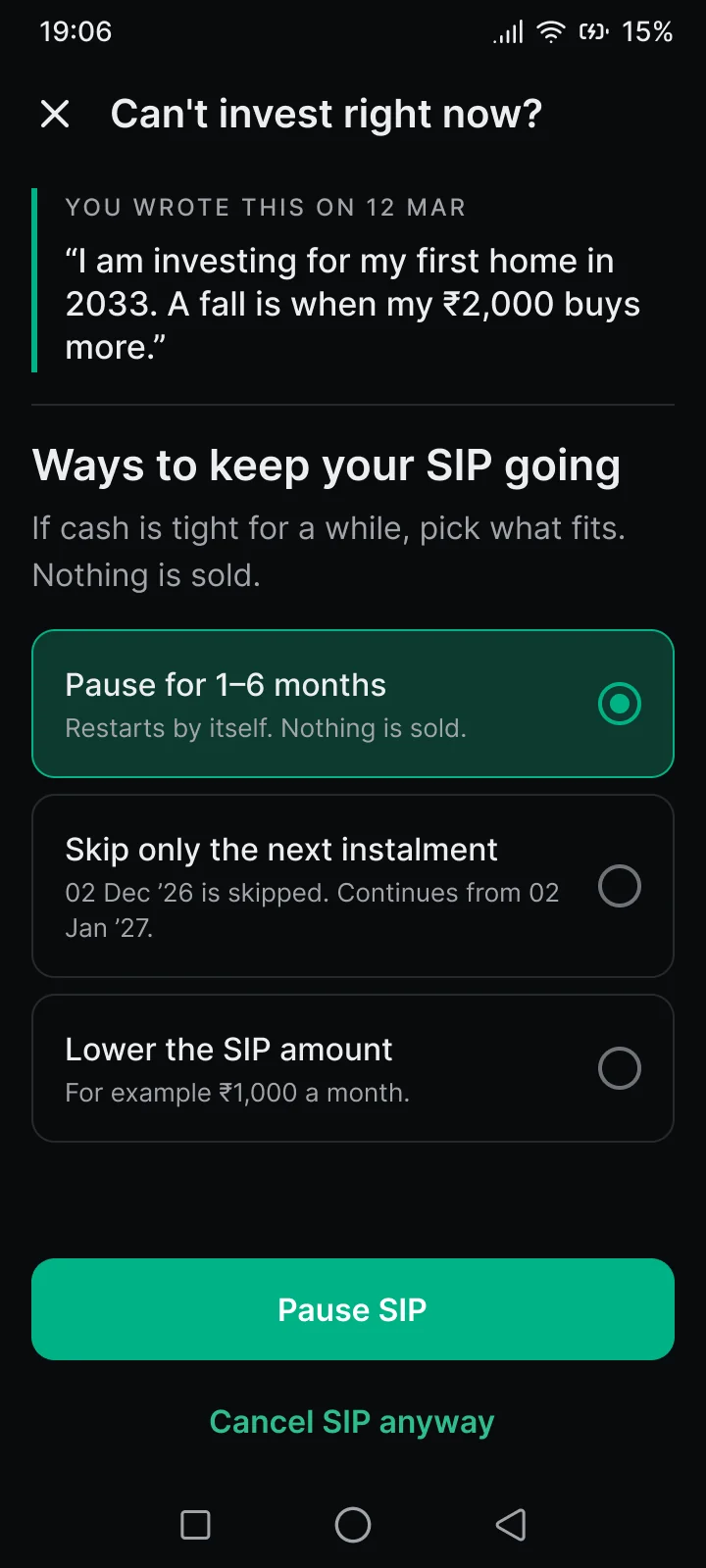
Each reason opens at most one screen of matching help.
- Can't investWays to keep your SIP going
- Not satisfied with returnsThis fall vs past falls
- Fund too riskySmall cap funds swing a lot
- PausePause instead of cancelling?
Ideas we rejected
A 24-hour cooling-off timer
Feels like a trap
An adviser call
Counts as advice
"Buy the dip" alerts
Counts as advice
Auto-switching funds
Counts as advice
06Testing
We tested the prototype with 6 people aged 22 to 26, one at a time, thinking aloud.
I ran 2 of the tests myself.
The tasks
- 01Start a SIP
- 02Want to stop during a fall
- 03Need cash
- 04Turn the reminders off
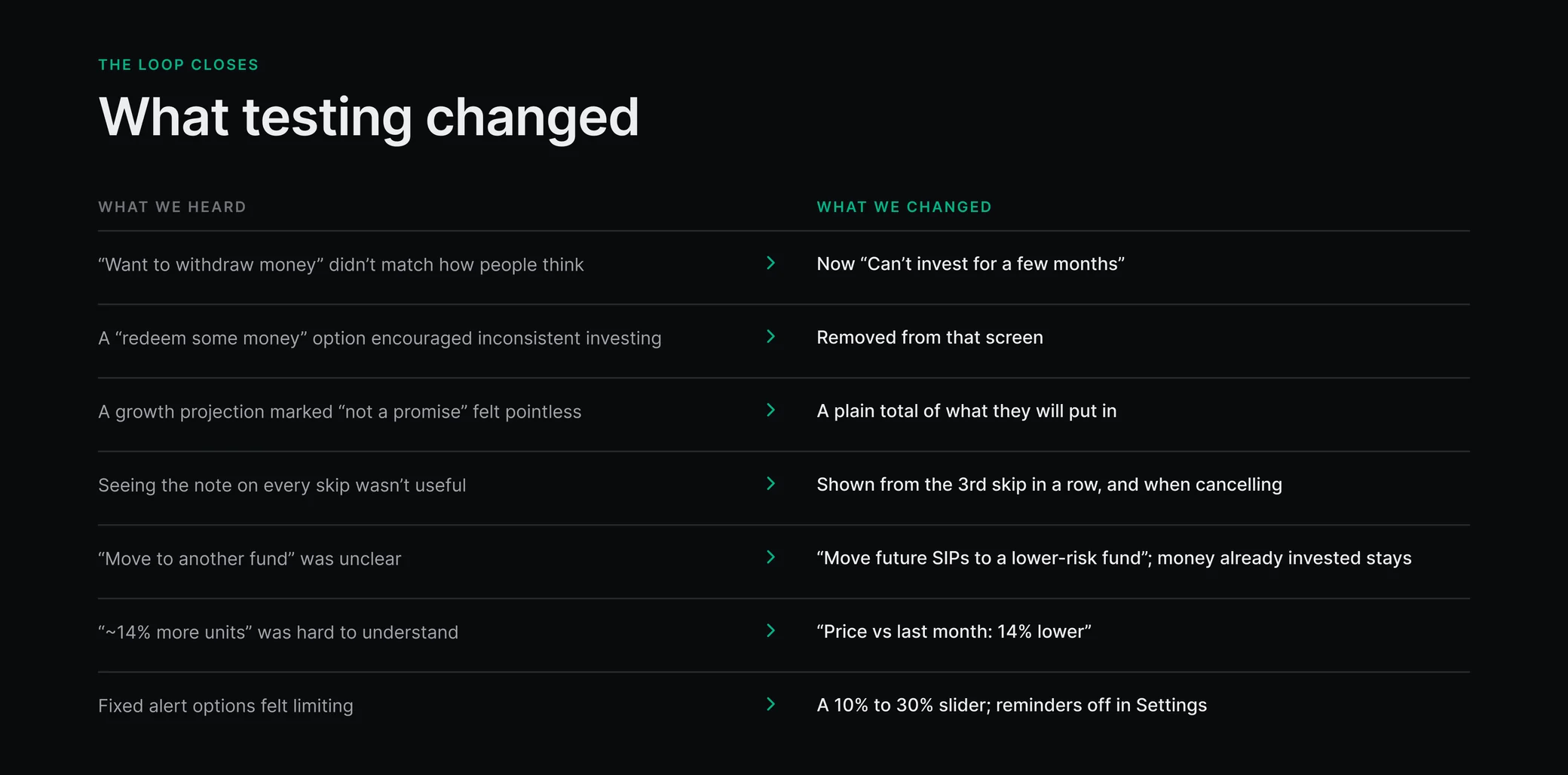
Testers said the help came at the right moment and did not feel pushy. The past-falls comparison was the most useful part.
Some wording confused them, so I changed it.
| Before | After |
|---|---|
| "Can't invest for a few months" | |
| The note now appears only from the 3rd skip in a row | |
| What the investor will have put in |
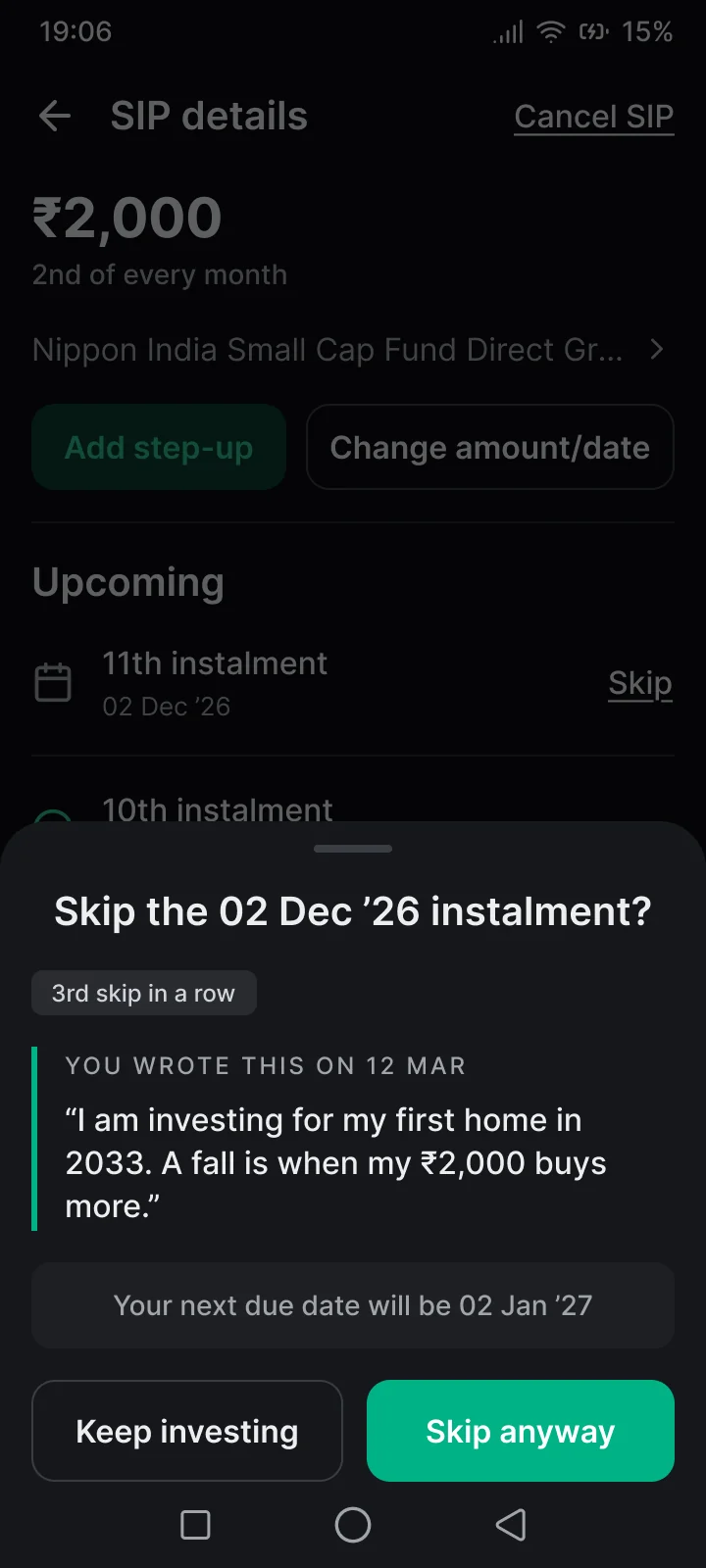
Skip sheet, with the note on the 3rd skip in a row
07Limits
Six testers is a direction, not proof.
Limits
All six testers were people we knew.
We did not measure how many testers kept their SIP.
The numbers inside the prototype are illustrative.
How it was built
I built the prototype screens and the deck with Claude through Figma MCP, under my direction.
The research, the problem choice and the design decisions came from the team and me.